| Latin Name |
Dendrogale melanura |
| Conservation Status |
Vulnerable |
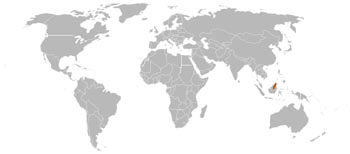
| Location
| Borneo |
| Colour |
Black/Buff/Red |
| Length |
10 - 15 cms (4 - 6 inches) |
| Tail |
9 - 14 cms (3.5 - 5.5 inches) |
| Weight |
35 - 60 g (1.25 - 2.1 oz) |
| Life Expectancy |
- |
Main Characteristics
Bornean Smooth-Tailed Tree Shrews have a body length between 10 and 15 cms (4 - 6 inches), a tail length between 9 and 14 cms (3.5 - 5.5 inches) and they weight between 35 and 60 g (1.25 - 2.1 oz).
They are coloured a mixture of black and buff on their upperside and their underside and legs are reddish in colour. They have well developed senses of hearing, smell and vision.
Habitat
Bornean Smooth-Tailed Tree Shrews are found in the mountain forests of Borneo at altitudes of 900 - 1,500 m (3,000 - 5,000 ft). They are solitary and they sleep in a leaf lined tree nest at night.
Diet
Bornean Smooth-Tailed Tree Shrews are omnivores and they feed on a variety of insects, small vertebrates, fruit and seeds.
Breeding
After a gestation period of approximately 50 days, a litter of 3 - 4 young are born. At birth the young are blind and hairless, but they are able to leave the nest when they are a month old.
Tree Shrews reach sexual maturity at around 4 months old and they generally breed throughout the year with no defined breeding season.
Subspecies
Subspecies of the Bornean Smooth-Tailed Tree Shrew include:
Dendrogale melanura melanura
Dendrogale melanura baluensis
Interesting Facts
Tree Shrews have the highest brain to body mass ratio of any animal, even higher than humans.
Bornean Smooth-Tailed Tree Shrews are threatened by habitat loss.
They spend more time in the trees than other species of tree shrew.
Similar Animals
Pen-Tailed Tree Shrew
Painted Tree Shrew
Palawan Tree Shrew
Striped Tree Shrew
Slender Tree Shrew
Pygmy Tree Shrew
Golden-Bellied Tree Shrew
Northern Smooth-Tailed Tree Shrew
|