| Latin Name |
Ommatophoca rossi |
| Conservation Status |
Vulnerable |
| Location
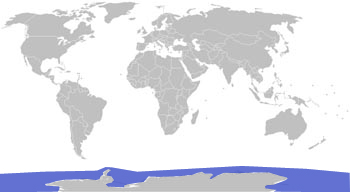
| Antarctic Waters |
| Colour |
Dark Grey - Brown |
| Length |
1.7 - 3 m (5.5 - 9.75 ft) |
| Weight |
130 - 215 Kgs (290 - 470 lbs) |
| Life Expectancy |
20 Yrs |
Main Characteristics
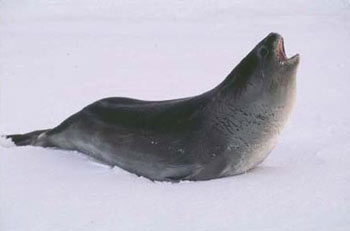
Ross Seals have a body length between 1.7 and 3 m (5.5 - 9.75 ft) and they weigh between 130 and 215 kgs (290 - 470 lbs). They have a slender body and a thick neck. They are dark grey/brown in colour and they have very large eyes.
Habitat
Ross Seals can be found in Antarctic waters.
Diet
Ross Seals mainly feed on fish, squid and krill and they dive to depths of several hundred metres to catch their prey.
Breeding
After a gestation period of 9 months, Ross Seals give birth to a single pup. They are weaned at 4 - 6 weeks old and they reach sexual maturity at 2 - 4 years of age.
Predators
Predators of Ross Seals include killer whales and leopard seals.
Subspecies
Ross Seals have no subspecies
Interesting Facts
Ross Seals are named after Sir James Clark Ross who led the Erebus and Terror expeditions to the Antarctic.
Ross Seals are also known as:
Bigeyed Seal
Similar Animals
Leopard Seal
Crabeater Seal
Weddell Seal
Bearded Seal
Hooded Seal
|